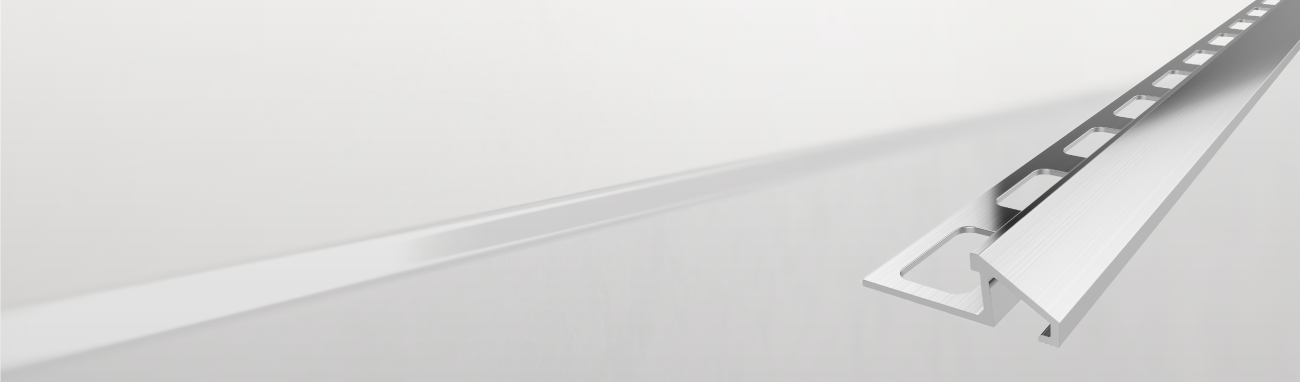
Set the visual and application brief first
A finish description should communicate more than a colour name. Start with where the profile is used, which faces remain visible, the desired reflectivity or texture and how the finished part relates to nearby materials.
Finish availability depends on the profile, geometry, quantity and project requirement. Treat this guide as a comparison framework and confirm the selected direction for the specific enquiry.
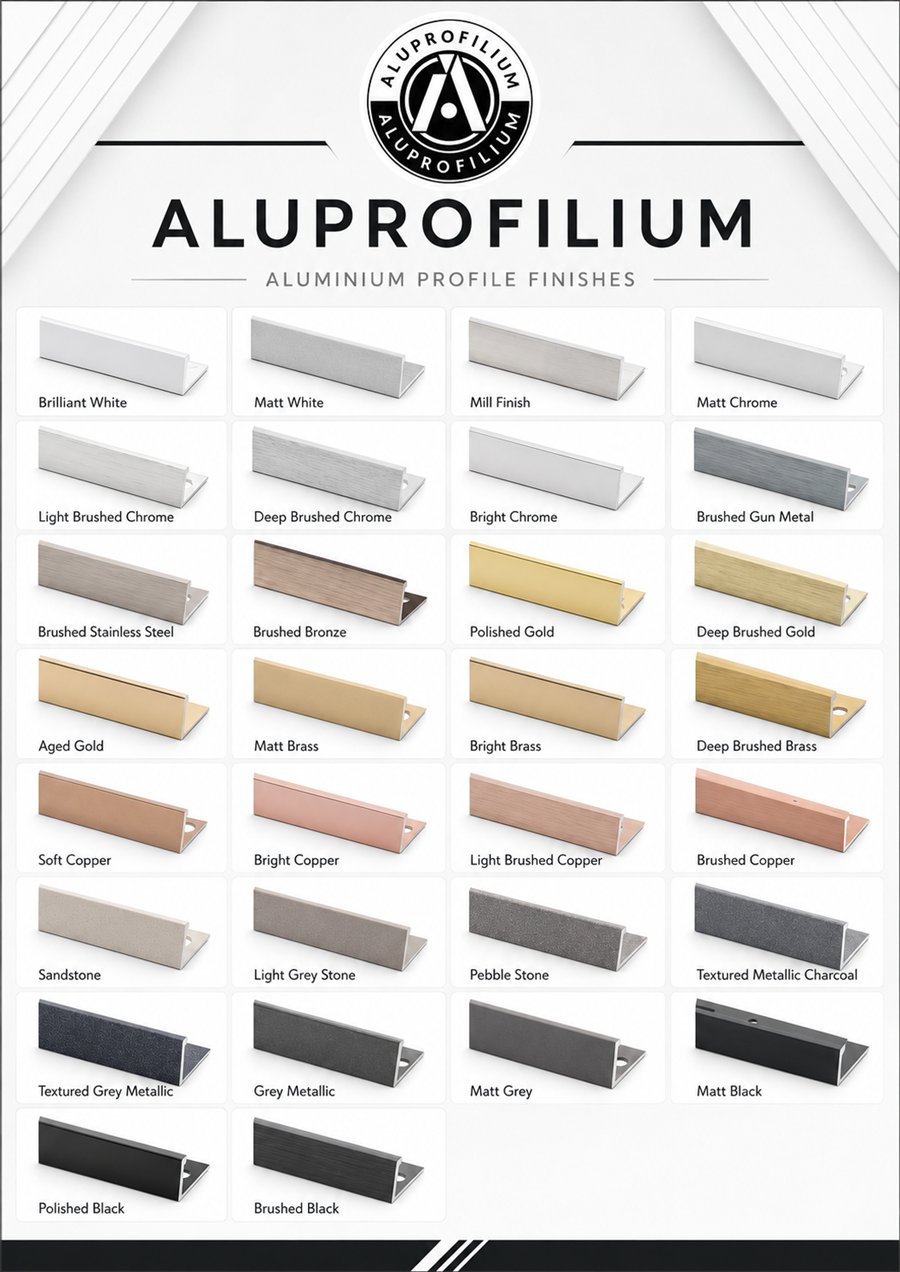
Common aluminium profile finish directions
| Finish direction | Visual character | Specification note |
|---|---|---|
| Mill finish | Natural as-produced metal appearance | Describe any appearance-sensitive surfaces because natural variation may be visible |
| Anodised | Controlled metallic surface in selected colour directions | State colour direction and reference requirements; confirm suitability per profile |
| Brushed | Directional linear texture with reduced visual uniformity of reflection | Identify the brushing direction and visible faces |
| Bright or polished appearance | Higher-reflectivity decorative direction | Use a sample or clear reference for appearance-sensitive work |
| Powder-coated | Opaque colour with selectable texture and gloss directions | Provide the colour reference and describe gloss or texture expectations |
| Decorative effect | Patterned or material-referencing appearance | Confirm the exact reference, exposed faces and project-specific availability |
Use a shared finish reference
Names such as silver, gold, bronze, black, brushed chrome or wood effect can describe broad directions, but they do not always define a complete finish standard. Screen images also vary with lighting, photography and display settings.
- Use a colour code, physical sample or approved reference when appearance is critical.
- Identify visible and concealed faces.
- State texture, gloss and directional brushing expectations.
- Clarify whether the order must be reviewed against an earlier approved batch or sample.
- Keep reference names and codes consistent across the purchase documents.
A controlled reference is more reliable than adding several subjective adjectives to a finish name.
Connect the finish to use and handling
The application context helps frame the finish requirement. Interior decorative trim, floor transitions, stair profiles, fabrication sections and exterior architectural details do not share the same visual or handling priorities.
Describe exposure, cleaning conditions, contact with adjacent materials and the level of visual scrutiny expected after installation. These inputs support review; they do not replace a project specification or technical approval where one is required.
Define how visible surfaces should be protected
Surface expectations continue through handling and packing. If the profile has appearance-critical faces, identify them and state any known protective-film, individual wrapping, separator, carton or labelling requirements.
Packaging should be reviewed with profile geometry, length, quantity and transport method. Avoid treating one packing format as suitable for every order.
Finish quotation checklist
- Finish family
Mill, anodised, brushed, bright, powder-coated or decorative direction. - Colour reference
Code, sample or approved reference where applicable. - Texture and gloss
State the intended appearance without relying only on a generic colour name. - Visible faces
Mark which surfaces remain exposed after installation. - Application
Describe interior, exterior, floor, wall, stair, furniture or fabrication context. - Protection
List known film, wrapping, separator, carton or label requirements. - Profile and quantity
Link the finish request to the profile drawing, length and order quantity.
Finish specification questions
Is a finish name enough for a quotation?
A finish name establishes direction, but colour, texture, gloss, visible faces and reference-sample requirements may also be needed for an appearance-sensitive quotation.
Can all aluminium profiles use the same finish options?
No universal availability should be assumed. Finish suitability and availability should be confirmed for the specific profile geometry, quantity and project requirement.
How should I specify a powder-coated colour?
Provide the colour reference used by the project and describe gloss or texture expectations. Use an agreed sample when the visual match is critical.
Why should visible faces be identified?
Visible-face information focuses appearance and handling requirements on the surfaces that remain exposed after fabrication or installation.